
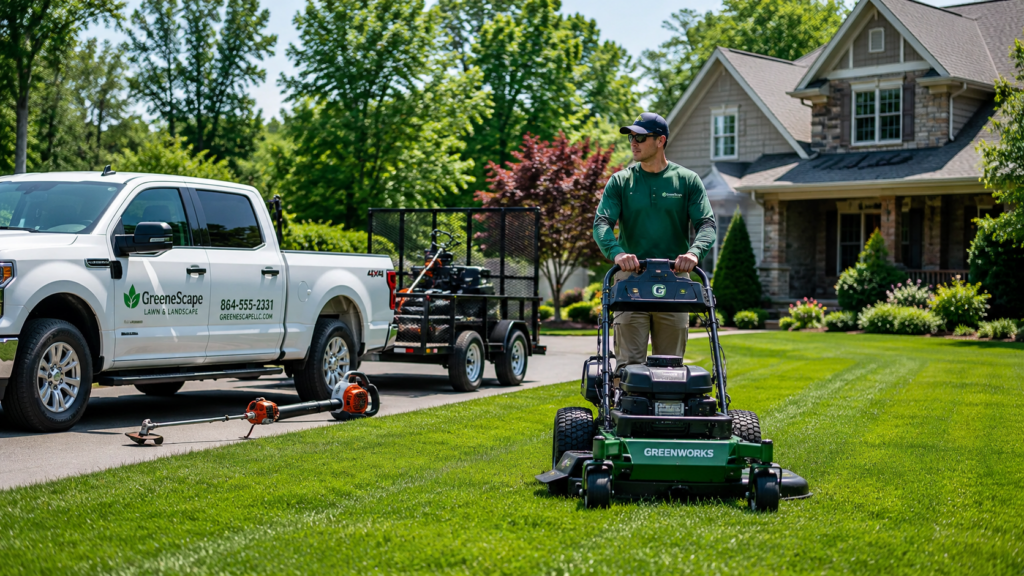
Learning how to price lawn mowing jobs is essential for building a profitable lawn care business. Your price must cover your labor, fuel, equipment, travel time, business expenses, and profit.
The best way to price a lawn mowing job is to measure the property, estimate the total time required, calculate your costs, and add a reasonable profit. You can charge by the yard, square foot, acre, hour, or use a flat rate based on the property size and difficulty.
This guide explains each pricing method and shows you how to create lawn mowing quotes that are fair to your customers and profitable for your business.
Why Lawn Mowing Prices Vary
Two lawns that look similar in size may require very different amounts of work.
One property may be flat, open, and easy to mow. Another may have steep slopes, gates, trees, flower beds, playground equipment, or heavy grass growth.
The price of a lawn mowing job may depend on:
- Yard size
- Grass height and condition
- Property layout
- Hills or slopes
- Number of obstacles
- Gate access
- Mowing frequency
- Edging and trimming needs
- Cleanup requirements
- Travel distance
- Equipment needed
- Desired profit
Because every property is different, you should not choose a price based only on what another lawn care company charges.
Your prices need to fit your own expenses, service quality, and income goals.
Ways to Price Lawn Mowing Jobs
Lawn care businesses commonly use several pricing methods. The best method depends on the property and how you operate your business.
Charge a Flat Rate
Flat-rate pricing gives the customer one set price for the mowing service.
For example:
- Small lawn: $40
- Medium lawn: $55
- Large lawn: $75
- One-acre property: $100
Customers usually prefer flat rates because they know what the service will cost before you begin.
You can calculate the rate privately using your expected labor time and expenses. The customer only sees the final price.
Flat-rate pricing works especially well for recurring customers because you become familiar with the property and know how long it normally takes.
Price by Yard Size
You can create pricing levels based on the size of the lawn.
A simple structure may include:
| Yard Size | Example Description |
|---|---|
| Small | Less than 5,000 square feet |
| Medium | 5,000–10,000 square feet |
| Large | 10,000–20,000 square feet |
| Extra Large | More than 20,000 square feet |
You can then set a starting price for each level and increase it based on property condition, access, and extra services.
This approach makes quoting faster, but you should still check the property before confirming the final price.
Price by Square Foot
Square-foot pricing can help you create consistent rates for properties with measurable lawn areas.
To calculate square footage, multiply the lawn’s length by its width.
For example:
100 feet × 80 feet = 8,000 square feet
If the lawn has several sections, measure each section and add them together.
Square-foot pricing is useful for estimating jobs, but the total area does not tell you everything. A smaller lawn with many obstacles may take longer than a larger open lawn.
Price by the Acre
Acre-based pricing is often used for large residential properties, fields, and commercial mowing jobs.
One acre equals 43,560 square feet.
When pricing by the acre, consider:
- Mower size
- Terrain
- Grass height
- Obstacles
- Trimming requirements
- Travel distance
- Number of acres
- Frequency of service
Larger properties may have a lower price per acre because less time is spent loading, traveling, and setting up for each acre.
However, difficult terrain or heavy trimming can increase the price.
Charge by the Hour
Hourly pricing may work for properties that are difficult to estimate or for one-time cleanup jobs.
You may use an hourly rate when:
- The grass is severely overgrown
- The property has many obstacles
- The work includes cleanup
- The customer requests several small tasks
- You are unsure how long the first service will take
Even when you give customers a flat rate, your hourly income goal should help you calculate that price.
For example, suppose your target rate is $60 per hour and you expect a job to take 45 minutes.
Your labor amount would be:
$60 × 0.75 hours = $45
You would then add any additional costs or adjust the price to meet your minimum service charge.
How to Price Lawn Mowing Jobs Step by Step
Use the following process to create a reliable lawn mowing estimate.
Step 1: Inspect the Property
Whenever possible, inspect the property before giving a final quote.
You may visit the property in person or use customer photos, satellite images, and property measurements to create an initial estimate.
Look for:
- Tall or wet grass
- Hills and steep slopes
- Narrow gates
- Fences
- Trees
- Flower beds
- Swimming pools
- Play equipment
- Ditches
- Exposed roots
- Rocks or debris
- Areas that require push mowing
- Large trimming areas
An inspection helps you understand how much mowing, trimming, edging, and cleanup the job will require.
Step 2: Measure the Lawn
Measure the mowable area rather than relying only on the total lot size.
The property may include a house, driveway, patio, wooded area, or other space that does not need mowing.
You can estimate the lawn using:
- A measuring wheel
- Property records
- Online satellite maps
- A lawn measurement app
- Length and width measurements
For irregular lawns, divide the property into smaller sections. Measure each section and then add the totals.
Accurate measurements help you create consistent prices and avoid undercharging for larger properties.
Step 3: Estimate the Total Job Time
Estimate how long the entire visit will take.
Include time for:
- Driving to the property
- Unloading equipment
- Mowing
- Trimming
- Edging
- Blowing off hard surfaces
- Bagging or removing clippings
- Loading equipment
- Customer communication
For example:
| Task | Estimated Time |
|---|---|
| Travel between jobs | 15 minutes |
| Unloading and setup | 5 minutes |
| Mowing | 25 minutes |
| Trimming and edging | 15 minutes |
| Blowing and cleanup | 5 minutes |
| Loading equipment | 5 minutes |
| Total | 70 minutes |
If you only count mowing time, you may earn much less per hour than expected.
Step 4: Calculate Your Labor Amount
Multiply the estimated time by your target hourly rate.
Suppose:
- Total estimated time: 70 minutes
- Target hourly rate: $60
Convert 70 minutes to hours:
70 ÷ 60 = 1.17 hours
Calculate the labor amount:
1.17 × $60 = $70.20
You may use this as a starting point for the job price.
Your target hourly rate should cover more than personal wages. It should also help pay for overhead, downtime, and other business expenses.
Step 5: Add Fuel and Equipment Costs
Lawn mowing requires fuel and causes wear on your equipment.
Job costs may include:
- Mower fuel
- Truck fuel
- Trimmer line
- Blades
- Oil
- Air filters
- Tires
- Equipment repairs
- Mower replacement
- Trailer maintenance
You do not need to calculate the exact cost of every blade or drop of fuel for each visit.
Instead, you can estimate an average equipment and supply cost for each job.
For example, you might include a set amount in every price to help cover fuel, maintenance, and equipment replacement.
Step 6: Account for Travel
Travel affects how many properties you can service in one day.
A $50 job located five minutes from another customer may be profitable. The same job located 30 minutes away may not be worth taking at that price.
Travel costs can include:
- Fuel
- Driving time
- Vehicle maintenance
- Trailer wear
- Insurance
- Time spent in traffic
Building a tight service route can reduce travel and increase your daily profit.
You may also charge an additional fee for customers outside your normal service area.
Step 7: Include Business Overhead
Overhead includes expenses that are not tied to one specific property.
Common lawn care overhead expenses include:
- Business insurance
- Licensing
- Advertising
- Website costs
- Phone service
- Scheduling software
- Bookkeeping
- Storage
- Equipment payments
- Office supplies
- Uniforms
- Taxes
Estimate your monthly or yearly overhead and divide it among the jobs you expect to complete.
This helps ensure every customer pays a fair share of the cost of operating your business.
Step 8: Add Your Desired Profit
Once you calculate your job costs, add enough profit to make the work worthwhile.
Profit is the money left after labor, fuel, equipment, overhead, and other expenses are covered.
Suppose your estimated job costs are:
| Cost | Amount |
|---|---|
| Labor and time | $45 |
| Fuel and equipment | $7 |
| Travel | $5 |
| Overhead allowance | $8 |
| Total estimated cost | $65 |
If you charge $65, you have only covered your estimated costs.
For a true 20% profit margin, divide the total cost by 0.80:
$65 ÷ 0.80 = $81.25
You may quote the job at $80 or $85, depending on the property and local market.
Lawn Mowing Pricing Examples
These examples show how the pricing process can work. Your actual rates will depend on your location, expenses, equipment, and service level.
Small Lawn Example
A small, flat lawn takes approximately 35 minutes from arrival to departure.
Estimated costs:
| Cost | Amount |
|---|---|
| Labor and time | $30 |
| Fuel and equipment | $4 |
| Travel | $3 |
| Overhead | $5 |
| Total cost | $42 |
For a 20% profit margin:
$42 ÷ 0.80 = $52.50
You may quote the job at approximately $50 to $55.
Medium Lawn Example
A medium lawn takes about one hour and includes mowing, trimming, edging, and cleanup.
Estimated costs:
| Cost | Amount |
|---|---|
| Labor and time | $50 |
| Fuel and equipment | $7 |
| Travel | $5 |
| Overhead | $8 |
| Total cost | $70 |
For a 20% profit margin:
$70 ÷ 0.80 = $87.50
You may quote approximately $85 to $90.
Large Lawn Example
A large property takes two hours and requires a riding mower, trimming, edging, and blowing.
Estimated costs:
| Cost | Amount |
|---|---|
| Labor and time | $100 |
| Fuel and equipment | $15 |
| Travel | $8 |
| Overhead | $12 |
| Total cost | $135 |
For a 20% profit margin:
$135 ÷ 0.80 = $168.75
You may quote approximately $165 to $175.
These are estimating examples, not fixed prices that every lawn care business should use.
Adjust Pricing for Property Difficulty
Yard size is important, but it should not be the only factor in your quote.
You may need to charge more for:
Tall or Overgrown Grass
Overgrown grass may require:
- Slower mowing
- Multiple passes
- Extra trimming
- Bagging
- Clipping removal
- Additional cleanup
Consider charging a one-time cleanup fee before placing the customer on a recurring schedule.
Hills and Slopes
Slopes can reduce mowing speed and increase safety risks.
They may also require a push mower, string trimmer, or specialized equipment instead of a riding mower.
Fenced Backyards
Small gates may prevent you from using larger equipment.
If you must use a smaller mower, the job may take longer and should be priced accordingly.
Many Obstacles
Trees, flower beds, furniture, toys, trampolines, and landscaping features can increase mowing and trimming time.
A wide, open lawn is usually faster to complete than a heavily landscaped property of the same size.
Wet or Thick Grass
Wet or thick grass can clog equipment and require slower mowing or repeated passes.
You may need to reschedule the service or charge more when the condition adds significant time.
Weekly vs. Biweekly Lawn Mowing Prices
Weekly lawns are often easier and faster to maintain because the grass does not have as much time to grow.
Biweekly service may require:
- Slower mowing
- More trimming
- Extra cleanup
- Additional passes
- More stress on equipment
Because of this, a biweekly visit may cost more per service than a weekly visit.
For example:
- Weekly service: $50 per visit
- Biweekly service: $60 per visit
The exact difference should be based on how much additional time and work the longer schedule creates.
You may also choose not to offer biweekly service during periods of rapid grass growth.
Use a Minimum Service Charge
A minimum service charge helps protect your earnings on small properties.
Even a very small yard requires you to:
- Drive to the property
- Unload your equipment
- Complete the work
- Blow off hard surfaces
- Load the equipment again
- Process scheduling and payment
Without a minimum, you could spend a large part of an hour servicing a property that produces very little revenue.
Your minimum should cover your time, travel, expenses, overhead, and profit.
Should You Offer Lawn Care Packages?
Bundling services can increase the value of each customer.
A lawn care package may include:
- Mowing
- Trimming
- Edging
- Blowing
- Hedge trimming
- Leaf cleanup
- Weed control
- Seasonal cleanup
Keep your basic mowing service clear so customers understand what is included.
Extra services should either have separate prices or be part of a clearly defined package.
Packages can make scheduling easier and help customers compare their options.
Common Lawn Mowing Pricing Mistakes
Copying Another Company’s Prices
Another lawn care company may have different equipment, expenses, employees, or income goals.
Research local pricing, but calculate your own costs before choosing a rate.
Pricing Only by Yard Size
A large open lawn may take less time than a smaller property with gates, hills, and many obstacles.
Always consider the difficulty and total time required.
Forgetting Travel Time
Driving between properties is part of the workday.
A scattered route can reduce the number of lawns you complete and lower your hourly earnings.
Charging the Same for Weekly and Biweekly Service
Biweekly lawns may take longer and require more cleanup.
Price the service based on the actual amount of work.
Not Charging for Overgrown Lawns
A severely overgrown yard is not a normal maintenance visit.
Charge a cleanup or first-service fee when the job requires extra labor.
Ignoring Equipment Replacement
Mowers, trimmers, blowers, and trailers eventually need repairs or replacement.
Include these long-term costs in your pricing.
Confusing Revenue With Profit
A $75 payment is not $75 of profit.
You must subtract labor, fuel, equipment, travel, overhead, and other expenses to understand what the job actually earns.
Never Increasing Prices
Fuel, insurance, parts, and equipment costs can rise over time.
Review your prices regularly to make sure they still support your business.
Use Our Free Lawn Care Calculators
Our free lawn care calculators can help you estimate job prices, expenses, time, income, and profit.
Useful tools include:
- Lawn Care Pricing Calculator
- Lawn Care Profit Calculator
- Lawn Care Hourly Rate Calculator
- Lawn Care Cost Per Job Calculator
- Lawn Care Time Per Job Calculator
- Lawn Care Price by Yard Size Calculator
- Lawn Care Price Per Acre Calculator
- Lawn Care Price Per Square Foot Calculator
Use the calculators as planning tools, then adjust your final quote for the property’s condition, layout, and difficulty.
Frequently Asked Questions
How much should I charge to mow a lawn?
Your price should cover labor, travel, fuel, equipment, overhead, and profit. Measure the mowable area, estimate the total time needed, calculate your costs, and then add your desired profit. The final amount will vary based on the property and your local market.
Is it better to charge by the hour or by the lawn?
Many lawn care businesses give customers a flat rate per visit. However, the flat rate should be based on your expected hourly earnings, job costs, and total service time. Hourly pricing may work better for unusual or overgrown properties.
Should biweekly lawn mowing cost more per visit?
Biweekly mowing may cost more per visit because the grass has more time to grow. It may require slower mowing, additional passes, and extra cleanup compared with weekly service.
How do I price an overgrown lawn?
Inspect the property and estimate the additional labor, mowing passes, trimming, and debris removal required. Charge a one-time cleanup fee or a higher first-service price before beginning regular maintenance.
Final Thoughts
Learning how to price lawn mowing jobs requires more than choosing a price based on yard size.
A profitable lawn mowing quote should account for:
- Mowable square footage
- Property layout
- Grass condition
- Labor time
- Trimming and edging
- Travel
- Fuel
- Equipment wear
- Business overhead
- Desired profit
Inspect and measure the property, estimate the full amount of time required, calculate your costs, and add a reasonable profit.
Your price does not need to be the lowest in your area. It needs to be clear, competitive, and high enough to support a dependable lawn care business.
Use our free lawn care calculators to test your pricing before sending your next estimate.
Disclaimer: The calculators, guides, and estimates provided on Service Calculator Hub are for informational and educational purposes only. Actual prices, costs, profits, and income may vary based on location, experience, market conditions, materials, labor costs, and individual business circumstances. Always conduct your own research and use your professional judgment when pricing services or making business decisions.